
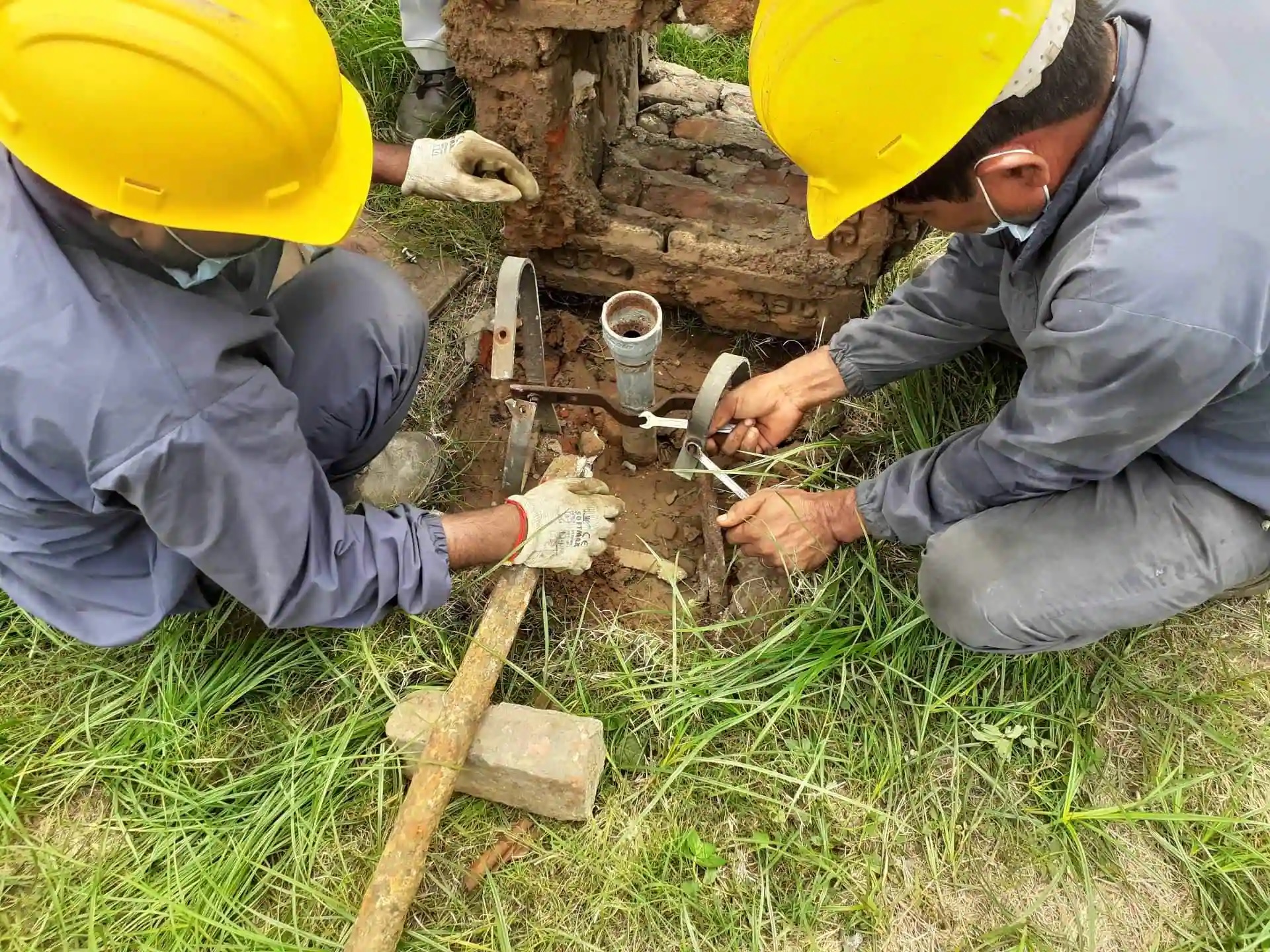
Earthing is one of the most important and most overlooked elements of any electrical installation. Aeropack Infra designs and installs both conventional and chemical earthing systems that provide a safe, low-resistance path for fault current to flow into the ground. Good earthing protects people from electric shock, protects equipment from damage, and allows protective devices to operate quickly and correctly when a fault occurs. Poor earthing endangers everything connected to it.
The purpose of earthing is to keep exposed metal parts at a safe potential and to give fault current an easy route to earth so that fuses and breakers trip promptly. The lower and more stable the earth resistance, the safer and more reliable the system. That is why the choice between conventional and chemical earthing — and the quality of installation — matters so much.
Conventional earthing
Conventional earthing uses a copper or GI plate or pipe buried in a pit, surrounded by alternating layers of charcoal (coal) and salt to improve conductivity and retain moisture around the electrode. It is a proven, economical method that has protected installations for generations. Its performance, however, depends on soil moisture and condition, and it benefits from periodic watering and maintenance to keep the resistance low, especially in dry seasons.
Chemical earthing
Chemical earthing uses an electrode filled and surrounded by a special conductive compound that retains moisture and keeps the surrounding soil conductive over a wide range of conditions. The result is a low, stable earth resistance that needs little or no maintenance, making it ideal for sensitive electronics, data centres, sandy or rocky soils and any site where consistent performance matters.
- Conventional plate and pipe earthing (copper / GI)
- Charcoal-and-salt backfill for conventional pits
- Maintenance-free chemical earthing electrodes
- Conductive earth-enhancing compounds
- Earthing for power systems, electronics and lightning protection
- Earth-resistance testing and certification
- Multiple-electrode and grid earthing where required
- Inspection and maintenance support
The difference is maintenance and consistency: conventional earthing is economical but moisture-dependent, while chemical earthing holds a low, stable resistance year-round with little upkeep — which is why critical and electronic installations increasingly choose it.
Choosing and verifying the right system
We assess your soil conditions, the sensitivity of your equipment and your maintenance preferences, then recommend conventional or chemical earthing — or a combination — to achieve the resistance your installation requires. Every earthing system we install is tested and the earth resistance verified, because earthing is too important to leave unproven. Talk to our engineers about safe, reliable earthing for your facility.
Why earthing is non-negotiable
Earthing is one of the most important and most overlooked parts of any electrical installation. Its job is to keep exposed metalwork at a safe potential and to give fault current an easy route to earth, so that protective devices trip quickly and people are protected from electric shock. The lower and more stable the earth resistance, the safer and more reliable the whole installation. Poor earthing, by contrast, quietly endangers everything connected to it.
Choosing between conventional and chemical
Conventional earthing — a copper or GI electrode surrounded by charcoal and salt — is proven and economical, but its performance depends on soil moisture and benefits from periodic maintenance. Chemical earthing uses an electrode filled and surrounded by a conductive, moisture-retaining compound that holds a low, stable resistance across a wide range of conditions with little upkeep, which makes it ideal for sensitive electronics, data centres and difficult soils. We help you choose the right method — or a combination — for your conditions, equipment and maintenance preferences.
Installed and verified
Earthing is too important to leave unproven, so every system we install is tested and its earth resistance verified, with multiple-electrode or grid arrangements provided where the installation demands it. We also offer inspection and maintenance, because a good earth at installation must remain a good earth for years to come.
Interested in Conventional / Chemical Earthing?
Talk to our engineers for a free, no-obligation consultation.